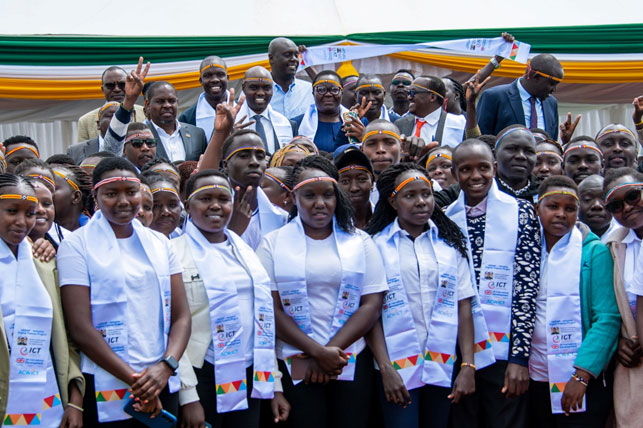
A new cohort of 450 young people in Elgeyo Marakwet County has officially graduated from the UK Government-funded Inclusive Digital Futures (IDF) programme, marking a significant milestone in the county’s efforts to position youth, women, and persons with disabilities at the centre of Kenya’s digital economy.
Speaking during the graduation ceremony at St. Patrick’s Boys High School in Iten, Elgeyo Marakwet County, Governor Hon. Wisley Rotich termed the initiative a milestone in addressing youth unemployment and driving economic growth, given the challenge of internet penetration in rural areas of Kenya.
“AI has become a powerful tool to transform your lives. I urge the youth to take an interest, gradually train yourselves to improve your skills, and become competitive. Do not live a life of excuses. As a youth, make your time online productive.”
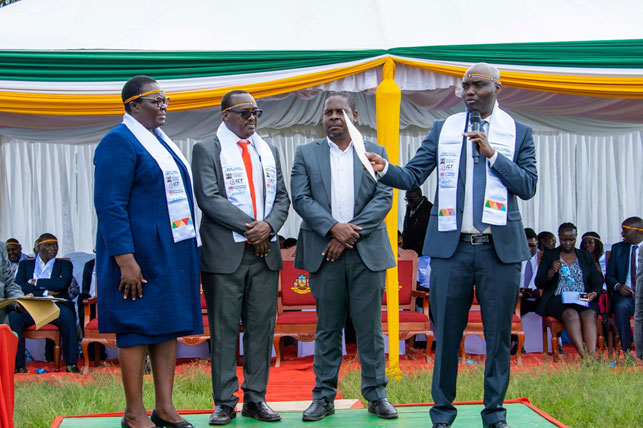
Governor Rotich, who is also the Chairperson of the ICT and Knowledge Management Committee at the Council of Governors, reaffirmed his commitment to leveraging digital skills as a driver of inclusive growth. UKDAP-IDF was highlighted as a critical enabler aligned with Kenya’s broader digital transformation agenda, including youth empowerment and job creation under national and county development priorities. He urged the graduates to apply their skills, innovate, and actively contribute to the growth of Elgeyo Marakwet County’s digital economy and to Kenya’s growth.
The British High Commission representative Mr. John Manyolo emphasised the need for ensuring sustainability for the interventions through the support of the County Government.
The African Centre for Women in Information and Communications Technology (ACWICT) CEO Constantine Obuya highlighted the importance of collaboration in the programme’s success, noting that it positions Elgeyo Marakwet as an emerging hub for digital innovation and investment.
“As we move forward, the focus is on ensuring these efforts translate into sustainable opportunities for young people. This is key in the growing competition among counties to harness technology for economic transformation,” she said.
The graduation ceremony, held at St. Patrick’s High School in Iten, brought together government officials, development partners, trainers, and community members to celebrate the successful completion of an intensive digital skills training programme.
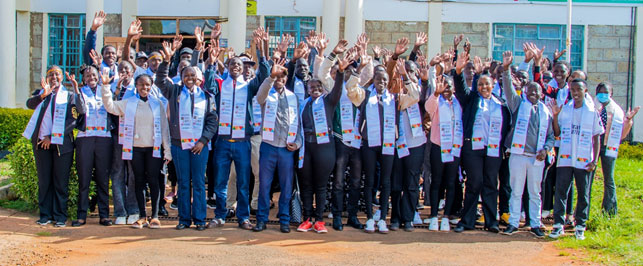
The graduates, drawn from diverse backgrounds including youth, women, and persons with disabilities, underwent a structured training pathway combining specialised track skills, and applied practical learning. The programme was designed not merely as a training intervention, but as a transition pipeline into employment, entrepreneurship, and digital service provision. Participants were equipped with competencies across key areas such as:
- Digital Agri-preneurship
- Creative economy and digital content development
- Gig Work
- IT support and device repair
This integrated approach ensured that learners developed both technical skills and the confidence to apply them in real-world economic contexts.

Graduates shared testimonies of how the programme had shifted their outlook, from limited local opportunities to a broader vision of participating in the global digital marketplace.
Beyond training, the graduation signaled the beginning of the next phase: transition into the labor market. The IDF model integrates linkages with employers, investors, and enterprise support systems to ensure that graduates can translate their skills into income-generating activities. With the digital economy continuing to expand, programmes such as IDF are positioning local communities, especially those traditionally excluded, to participate competitively and sustainably.